
Bridging Science and Coaching: Applying Lactate Physiology to Swimming Training
Blog post description.

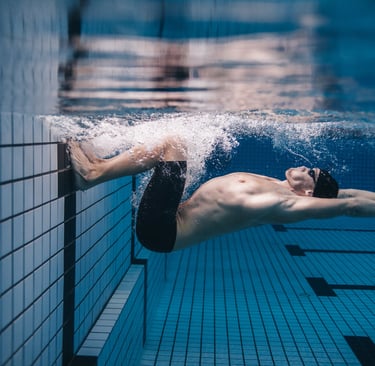
Understanding the science behind lactate’s role in exercise can fundamentally change how coaches and swimmers approach training. Lactate is not just a byproduct of effort—it’s a signal, a fuel, and a catalyst for adaptation. By aligning training principles with lactate’s physiological roles, coaches can design programs that optimize performance and recovery while fostering long-term development.
Building Aerobic Capacity: Leveraging Lactate as a Training Stimulus
Aerobic capacity forms the foundation of swimming performance, especially for longer distances. Training at moderate intensities predominantly uses the oxidative energy system, which relies on lactate as a fuel. During this type of training, lactate produced in glycolytic muscle fibers is transported to oxidative fibers or other tissues, like the heart, to be oxidized. This process enhances mitochondrial density, improves metabolic flexibility, and increases the efficiency of lactate clearance. For swimmers, this translates into the ability to sustain higher speeds with less energy cost, critical for both endurance events and maintaining performance during long training sessions.
Threshold Training: Enhancing Lactate Clearance and Buffering Capacity
The lactate threshold represents the intensity at which lactate production begins to exceed clearance. Training around this threshold challenges the body’s ability to shuttle and utilize lactate effectively. From a physiological perspective, such training improves the capacity of muscle cells to transport lactate, increases the activity of enzymes like lactate dehydrogenase (LDH), and enhances the buffering of hydrogen ions. For swimmers, this means greater resilience at race-pace intensities, enabling them to sustain high speeds without succumbing to the fatigue associated with lactate accumulation.
High-Intensity Training: Maximizing Adaptations in Lactate Tolerance and Recovery
High-intensity efforts, where lactate production is maximal, drive profound adaptations in the body. These include increased lactate transporter density (e.g., monocarboxylate transporters or MCTs), enhanced mitochondrial respiration, and improved muscle pH regulation. High lactate levels also activate signaling pathways like PGC-1α, which promote mitochondrial biogenesis and energy efficiency. For swimmers, this means being better equipped to tolerate the high-intensity bursts needed during sprints, starts, and finishes. Moreover, the improved ability to recover from high lactate conditions enables swimmers to perform better in training and competition.
Active Recovery: Tapping Into Lactate’s Role as a Fuel
Lactate is not just a product of effort; it’s also a fuel. Between intense bouts, active recovery allows lactate to be redistributed to tissues like the liver, heart, and slow-twitch muscle fibers, where it is either oxidized or converted back into glucose. This not only supports immediate recovery but also trains the body to integrate lactate into energy pathways more efficiently. In swimming, this means shorter recovery periods between efforts and better performance consistency during grueling training sessions or multi-race meets.
Systemic Adaptations: Lactate as a Global Signal
The effects of lactate are not confined to the muscles producing it. Lactate acts as a signaling molecule, stimulating systemic adaptations like angiogenesis (new blood vessel formation) and neuroplasticity (brain adaptations). For swimmers, these adaptations improve oxygen delivery to working muscles and enhance motor control, critical for technical improvements in stroke mechanics and efficiency. Training that produces lactate in controlled amounts ensures these systemic benefits without overloading recovery systems.
Tailoring Training to Individual Responses
Each swimmer responds differently to lactate-producing efforts, influenced by factors like their aerobic base, muscle fiber composition, and race distance specialization. Monitoring lactate levels or observing signs of fatigue during training can help coaches fine-tune the balance between aerobic, threshold, and high-intensity work. For example, a sprinter may benefit from focusing on lactate tolerance and recovery, while a distance swimmer may prioritize enhancing lactate clearance and oxidative capacity.
By grounding swimming training in the science of lactate physiology, coaches can foster adaptations that align with each athlete’s unique needs and goals. This approach bridges the gap between theory and practice, transforming lactate from a misunderstood byproduct into a cornerstone of high-performance swimming.