
Lactate and Distance Swimming: Sustaining Performance in 800m and 1500m Races
Blog post description.

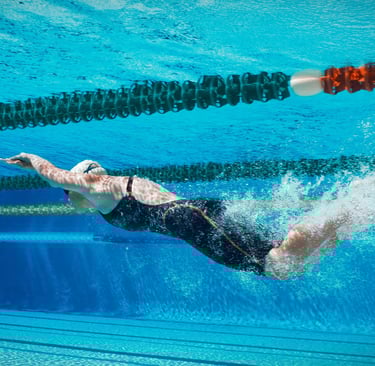
Distance swimming events like the 800m and 1500m demand endurance, efficiency, and the ability to sustain a high intensity for prolonged periods. Unlike sprint and middle-distance events, where anaerobic energy systems play a prominent role, distance swimming relies heavily on aerobic metabolism. However, lactate still plays a pivotal role—not as a limiting factor but as a crucial element in energy production, signaling, and adaptation. Understanding how lactate physiology supports endurance can help swimmers and coaches optimize training strategies for success in long-distance events.
The Role of Lactate in Distance Swimming
In distance swimming, the aerobic energy system is the primary driver of performance. The steady-state nature of these races means that energy demands are met largely by oxidative metabolism, which relies on oxygen to produce ATP efficiently. However, lactate is still central to this process, functioning as both a signaling molecule and an energy substrate.
During prolonged efforts, lactate produced by glycolysis in fast-twitch fibers is transported to slow-twitch fibers and oxidative tissues like the heart for oxidation. This process, known as the lactate shuttle, ensures that lactate is not wasted but used as a fuel source to sustain performance. Additionally, lactate can be converted back into glucose in the liver via gluconeogenesis, providing an ongoing supply of energy.
Lactate’s role as a signaling molecule is equally important. It triggers adaptations like mitochondrial biogenesis, improved capillary density, and enhanced enzymatic activity in oxidative pathways. These changes increase the body’s capacity to clear and utilize lactate efficiently, ensuring that even under steady-state conditions, the body remains resilient to the metabolic stress of prolonged effort.
Key Adaptations for Distance Swimming
Training for distance events develops specific physiological adaptations that are essential for sustained performance:
Enhanced Lactate Clearance: Increased activity of lactate transporters (MCT1 and MCT4) facilitates the movement of lactate to oxidative tissues, where it is metabolized efficiently.
Increased Mitochondrial Density: More mitochondria mean a greater capacity for aerobic energy production and lactate oxidation.
Improved Fat Oxidation: Distance training enhances the body’s ability to use fat as a fuel source, sparing glycogen and reducing lactate production at submaximal intensities.
Greater Capillary Density: Improved blood flow ensures efficient oxygen delivery and waste removal, critical for maintaining steady-state performance.
Training Types for Distance Swimmers
Distance training focuses on building an exceptional aerobic foundation while fine-tuning the body’s ability to clear and utilize lactate. Here are the primary types of training and their physiological impacts:
Aerobic Base Training: Prolonged swims at low to moderate intensity form the cornerstone of distance training. This type of training increases mitochondrial density, enhances fat oxidation, and improves the efficiency of lactate clearance. It also conditions the cardiovascular system to deliver oxygen more effectively to working muscles.
Threshold Training: Swimming at or slightly below the lactate threshold challenges the body to clear lactate while maintaining a steady effort. Physiologically, this training increases the activity of lactate transporters and improves mitochondrial function, enabling swimmers to sustain higher intensities without accumulating excessive lactate.
Tempo Intervals: Slightly shorter, sustained efforts at a pace near race intensity help swimmers adapt to the metabolic demands of competition. These efforts improve lactate shuttling and the balance between energy production and utilization.
Recovery Swims: Low-intensity sessions promote active lactate clearance and ensure that oxidative pathways remain efficient. These swims also support overall recovery, allowing swimmers to handle greater training loads.
The Art of Pacing: Lactate’s Role in Strategy
For distance swimmers, pacing is critical. Starting too fast can lead to excessive lactate production and premature fatigue, while pacing too conservatively can leave untapped potential. Training that includes race-specific pacing helps swimmers learn to manage lactate production and clearance, ensuring optimal performance across the entire race.
Harnessing Lactate for Endurance Success
In distance swimming, lactate is more than a byproduct—it’s a valuable resource. By supporting energy production, signaling adaptation, and enhancing recovery, lactate is integral to the physiological processes that underpin long-distance performance. Training strategies that leverage lactate dynamics not only improve endurance but also prepare swimmers to thrive under the unique demands of their events.
As this series concludes, the overarching message is clear: lactate isn’t the enemy—it’s the key to unlocking peak performance. From sprints to marathons, understanding and embracing lactate physiology is the foundation for smarter training, faster swims, and greater success in the pool.